Prime Pakistan limited has been recognized as a socially responsible company committed for the human development and social welfare of the communities living in the vicinity of its operational areas and contributing to United Nation’s Social Deelopment Goals (SDGs). Most of the concessional areas where Prime Pakistan operates are characterized by extreme poverty, prevalent unemployment, poor health status particularly of women & child, lack of basic amPrimeties and fragile social context. Given that context, Prime Pakistan being a socially responsible the company initiated running its sevral social welfare initiatives with major thrust on access to basic primary education, basic healthcare services and access to drinking water with their exploration licenses and development / production.
Ministry of Energy, Government of Pakistan have made Social Welfare Obligations compulory for all Exploration & Production Companies and are obligated to deposit these Obligations with the relevant Social Welfare Commitees (SWCs). Prime Pakistan not only fulfill this legal obligation but also invest over and above the the Obligations in their concessions under their Corporate Social Responsibility.
Prime Pakistan is present in district of Khairpur Mir’s (license development / production of Tajjal / Kadanwari) and in districts of Jamshoro and Dadu (development licenses / production of Bhit and Badhra) and. All areas have severe shortages of health facilities, schools and drinking water.
Prime Pakistan has contributed to followin SDGs in its concession areas
SDG 1 : No Poverty SDG 3: Good Helath and well being SDG 4 Quality Education SDG 6 Clean water andsanitation SDG 7 Affordabale and clean Energy SDG No. 13 Climate Action
Sustainability Approach
Prime Pakistan’s Sustaianbility evolvement started from different phases i.e. from No Social Welfare Obligation to Obligation and to depsoit it with Social Welfare Commitee. Prime Pakistan after its due Need Assesment started Helathcare and Education Projects from Community Assistance in Kadanwari/Tajjal concession, wheas there is no obligation. Therafter, welfare initiatves were cntinued in Kirthar concession with the Social Welfare Obligation with over and above investment with the addition of Water supply mangement and Infrstructure Projects in the area. The Sustainability Eveolment upatke gives and overview of the journey from Sustaiability Assistance to Social Welfare through Social Welfare Commitees (SWCs) established by Government of Pakistan.
Sustainbaility Project Cycle
Before starting any activity for new concession, Prime Pakistan visits the area to anlyse, identify and map stakeholders, disseminate the project information. Thereafter, Baseline cum Need Assessment Stydy is carried out to survey the area and collecct information about population, resources available and in use, dependency on resources, avilable infrstructure, Social Inventory and Need Assesment to evaluate opportunities’ for social development projects in future. After gathering the information Social Welfare Projects are designed after careful risk assessments, benftis to local communities, its outcome. Projetcs are regularly monitored after its execution and are evaluated for any possible revisions in implmentation startegy for its imporved outcome. During all these activities, all the stakheolders inlcuding District Adminstrationa and relevant Department are engaged an updated regualry. For the sustainability of the Social Welfare Projects, some of these Projects have been handed over to Government of Sindh. A strong stakeholder engagement strategy which build and increase trust and improve communication between the company and its stakeholders is an integral part of the “Prime way” of doing business wherever it operates.
Prime Pakistan started its jounry of Exploration and Production with award of Tajjal Concession to Prime Pakistan in 1987; at that time there was no clause of any Social Welfare Obligation in the Petroleum Concession Agreement. However; Prime Pakistan under its Corporate Social responsibility conducted Need Assessment survey and identified good healthcare and Education are the major problems of communities living in and around Prime Pakistan concessions areas.
Contribution to SDG 3: Good health and well being
Mother and Child Health Centres (MCHCs)
In order to address the core issues of women health and to ensure greater protection to women and children in local communities and reduction in infant and maternal mortality rates. In an environment of severe child malnutrition, poor health and lack of health facilities with high infant and maternal mortality rates, there was a need to intervene with a specific focus on assistance services dedicated to pre- and postnatal. Inhabiting at remote and arid areas, marginalized and vulnerable communities of Taluka Nara and Sehwan Shaif who have very inadequate facilities of health services.
Mother and Child Health Center (MCHC) was established in Taluka Chundo, District Khairpur Mir’s which was hub of the area and lacked healthcare facility with high maternal and child mortality rate. Prime Pakistan also established another MCHC in Union Council Jhanagara, District Jamshoro, Taluka Sehwan, District Jamshoro.
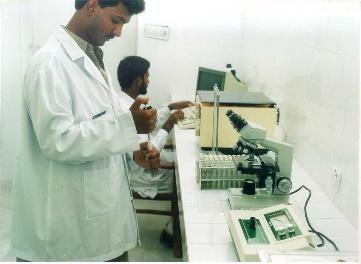
Both the MCHCs were multifunctional facilities operated by qualified doctors and paramedics, capable of delivering adequate services and were providing essential medicines. Moreover, in both facilities, great importance was given to healthcare education which prooved to be an integral part of the service offered. To date, interventions for the healthcare of the communities contributed lowering the infant mortality rate in the area. MCHCs were equipped with modern equipments, pathological laboratories, ambulances and qualified medical staff and were available there round the clock. the pathalogical laboratories providing following facilities to locals
⦁ General Consultation ⦁ Family Planning ⦁ Ambulance ⦁ Safe deliveries ⦁ Lab investigation ⦁ Growth Monitoring ⦁ Antenatal & Postnatal ⦁ Referral ⦁ Ultrasound ⦁ Health awareness sessions
Both the MCHCs had treated thousands of the patients of adjacent areas. For the Sustainability of the MCHC Chundko was handed over to a Commitee comprisisng Deputy commissioner, Khairpur, Assiatnat Commissioner, Chundko and Red Crescent. Whereas MCHC Jhangara was taken over by Health Department, Government of Sindh and handed over to People’s Primary Health care Inititave (PPHI) Sindh.
Community Health Centres (CHCs)
CHCs are multifunctional facilities operated by qualified doctors and paramedics, capable of delivering adequate services and to provide essential medicines. Prime Pakistan estblisdhed, Community Health Centre (CHC) in Ahsanabad with well equiped laboratory and ambulance while another CHC was established near Kadanwari Central Facility (Plant) which are providing quality health services to local communities throughout the year. Moreover, Prime Pakistan etsblished 03 CHCs at Kai, Naing and Bhit and one CHC at Badhra. The Centres have contributed healthcare services to thousands of inhbitants of the area.
Model Hospital Naing
Local community of the area highlighted the requirement of a hospital in the area so that people don’t have to travel to city as a referal. Prime Pakistan after evaluation of the situation, decided to to address the need of locals and have a comprehensive hospital coverage to provide healthcare service to the area of Naing and Kai. The Model Hospital was established in the year 2014 in Naing on a land donated by local area notable. The hsopital was built and equiped with modern pathalogical laboratory and an ambulance services to facilities local communities living around it. Populous of nearbby villages have benefitted from this facility. Government of Sindh have been requested to take over this Hospital along with pathalogical laboratory and Ambulance for its sustainability.
Mobile Medical Camps
Mobile Medical Camps establishment are a regualr fetaure of Prime Pakistan to facilitiate the Community living in remote area lacking basic facility and faces hardship to travel to nearest healthcrae facilities established by Prime Pakistan. Medical Camp provides free medical consultations to patients of the area. In case of further investigation requirement or specialist opinion and treatmet Petients are referred to Taluka and District Hospitals as per requirements. Medicines are provided to patients. The objective of “reducing health risks” is achieved through the interventions of general consultation to patients, mobile medical camps, referring cases to THQ & DHQ Hospitals, pathological test, family planning services and liaison meetings with health department.
Health awarness sessions
It is manadatory for the Healthcare staff to visit the villages of the area for Primary Healthcare awarness sessions to eductae the people to addresses behavioural factors such as the vaccination of families and pets, thorough hand washing and practising good food and heatlh hygiene. This make people to understand the risks of certain lifestyle choices and they start making changes in their routine lifecycle. Moreover, by raising public awareness about important health issues, healthcare awarness sessions can reduce ill-health and premature deaths from diseases that are treatable if they are addressed in time. The importance of health awareness sessions lies in giving people the opportunity to take accountability for their health. These sessions increase community awareness about different disease, its treatment and prevention. Such sessions are an effective tool to educate the community on different health issues and are extremely helpful in pursuing our mission to build a healthy community.
Baot Ambulance
Keti Bandar lies about 200 km southeast of Karachi city. Having status of Taluka, it is one of the major coastal towns along Pakistan coastline. The settlements are built on the mudflats between the channels/creeks. The location of Keti Bandar has changed thrice during past 70 years due to intrusion of sea. There are four major creeks in the area viz, Channa, Hajamro, Khobar and Kangri. There are no basic facilities in these islands. The speed boat ambulance is an innovative concept for the Islanders where no basic facility is available for them. The purpose of this initiative was to provide emergency relief and timely access to health facility to the Islands’ people as more lives could be saved.
The boat also facilitates the doctors from Rural Health Center Keti Bandar during their visit to the 13 Islands and provision of relief at their door step. Boat Ambulance is a mean of referral to carry patients from Islands to health facility. The boat is used for mobile health camps in Island villages twice in a week. Boat is used in health emergency response and evacuation of people during natural calamity like cyclones, heavy rains etc. Prime Pakistan has handed over the Boat to Pakistan Fisherfolk Forum for its sustainability. Populous of these from 13 islands are conitiously benefiting from this facility for health referrals, mobile clinics & rescue during flooding & unprecedented heavy rains.
Baot Ambulance
Pakistan, along with Afghanistan, remains the last polio-endemic countries in the world. WHO, with UNICEF and other key partners of the Global Polio Eradication Initiative, supports the Government of Pakistan in polio eradication efforts to ensure that Pakistan achieves polio-free status. Polio is a crippling disease and has no cure, but there is a safe and effective vaccine. The strategy to eradicate polio is therefore based on preventing infection by immunizing every child until transmission stops. In Pakistan, the program vaccinates over 40 million children during each national immunization day campaign through more than 285,000 frontline workers and targets specific high-risk areas with subnational immunization in areas where special focus is required to interrupt polio circulation.
Prime Pakistan have always supported District Health department by providing vehicles and health staff of its MCHC and CHC to carry out the vaccination of children in difficult terian of Bhit and Badhra mountain. Strategizing our healthcare initiatives more effectively and transparent manner with visible impacts among communities, a monthly meeting with the officials of Health Department, Government of Sindh are sheduled, with some clear and outstanding objectives of engagement with government health department.
Purpose of these meetings is to seek support from district health department for the the interventions of mobile medical camps as well as community health centers. Apart of this, our teams have also coordiantion meetings with PPHI, UNICEF and WHO at different levels for upbringig the cause of takle down measles issues, an information sharing regading the sitution of communities of remote areas & much of them were based on to have joint interventions of polio vacines. Prime Pakistan with the above initiatives is contributing towards United Nation’s Social Development Goals No. 3 Good Health and Well-Being. Polio is a crippling disease and has no cure, but there is a safe and effective vaccine. The strategy to eradicate polio is therefore based on preventing infection by immunizing every child until transmission stops. In Pakistan, the program vaccinates over 40 million children during each national immunization day campaign through more than 285,000 frontline workers and targets specific high-risk areas with subnational immunization in areas where special focus is required to interrupt polio circulation.
Contribution to SDG 3: Quality Education
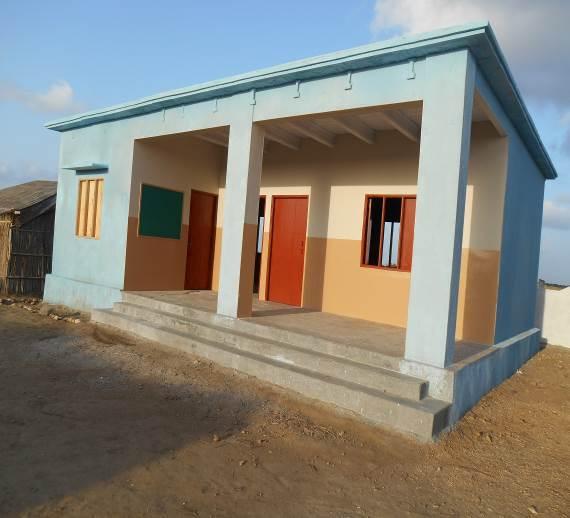
Qulaity education is another important area of intervention of Prime Pakistan limited for the children of the marginalized communities of the backward remote areas to contribute to the United Nation’s Social Development Goals No. 4 Quality education. Our commitment to education is on three main fronts: Primary Education, Vocational Training and the Computer Training Centers. We funded the construction of new primary schools in remote areas and the renovation of others. We also deal with the local school management committees to streamline operations in primary schools. These efforts include enrollment campaigns, planning of school development plans, annual teacher training, educational training sessions and visual learning, shoes and school bags for students, extra curricular activities and scholarships for higher studies. There are 12 community based Primary schools and a secondary school in Kadanwari and 15 communityt based primary schools in Bhit and Badhra and a primary school in Sukhpur with total enrollemnt of 1,616 students (994boys and 622 girls). All these schools are single teacher schools where multi-grade teaching is in practice.
Scholarship Award Initiatives
Enhancing capacities of local people through education and skill acquisition is one of the prime objectives of Prime Pakistan’s community development program. The long term objective of the educational program is to improve and enable access to young children (of school going age) to educational facilities. Provision of Scholarships to 15 students of Kadanwari D&P lease primary area (Taluka Nara, District Khairpur Mir’s) for Diploma of Associate Engineer (DAE) is the continuation of efforts/initiatives ensuring access to educational facilities. 15 Diploma of Associate Engineers and 2 scholarships for getting higher education in HEC registered universities. These scholarships were awarded to youth of Union council Jhangara of District Jamshoro and Union Council Chinni and Tando Rahim from District Dadu. The process of awarding Scholarships was transparent and competitive; every eligible youth of said union councils had equal opportunity to avail the scholarship.
Computer and Vocational Training Centers
Prime Pakistan aims to generate critical non-traditional employment opportunities in rural areas and to uplift, develop and build the capacity of artisans and craft persons particularly women, wage-earners and poor producer groups in Pakistan by providing support in cluster formation, product development, marketing, entrepreneurship, technology up-gradation by promoting computer and vocational skills by establishing computer centres and vocational centre in primary areas of its concessions. The Centers facilitate the youth of the vicinity with basic computer literacy and livelihood oppertunities. Computer Training Centre (CTC) and Vocation Training Centers (VTC) in Jahnagara and Chundko were setup in purpose bulit building by Prime Pakistan on land donated by a local notable for thisnoble cause. Thousands of students (boys and girls) compelted their respective training courses in these entres. After the successful results of the CTC in Chundko which benefited local youth in Chundko, District Khairpur , Institue of Busniess Administration (IBA) a reknow education institution, estbalished thier Computer Centre in Chundko to provide more Computer related courses to local youth of the area ; hence the facility of Prime Pakistan CTC in Chundko was closed. Prime Pakistan funded two (2) more VTCs in Union Council Chinni, District Dadu and one in Taluka Sehwan. These centres were at the veryge of closure due to no fundig; however due to support Prime Pakistan gae a new life to these centres and youths. These centres have provided given training to thousands of yourng girls of the area. By providing above primary education, scholarships to local youths and vocational trainings to local youth Prime Pakistan has not only contributed to SDG-4 Quality Education, SDG-5 Gender Equality and women empowerment.
Contribution to SDG-6 Cleanwater and sanitation
Access to Potable Water and Energy
In desert of Nara, a Taluka of district Khairpur Mir’s, people live in a pretty tough environment. In certain areas, the sand dunes behave very unusual. They are made of creeping sand very lightly sand covering the desert dunes and moves quickly changing direction according to the wind direction, making it difficult to approach humans and animals. Another part of the desert, a sparse vegetation depends on rainfall; there were only traces of irrigation or agriculture. The population lives in areas where there is no water and vegetation and people have to move to 2-5 Kilometer to fetch water for domestic use and for animals. The water is transported barefoot or often using animals or animal carts. The precious underground water is by duging deep pits 30-150 meters (mostly brackish water) and are covered with mud/ brick/ cement/ and concrete. Since water from these wells is very salty, it is mainly used for animals and other domestic purposes. Need Assessment of Kirthar concession also showed the critical situation of the area, where drinking water is rare in the area and people have no other choice but to drink contaminated stagnant water stored in rain ponds which is causing serious health issues. Being aware of this problem, Prime Pakistan built water related following infrastructure to use either domestic or agricultural: 11 pumping systems supplied by solar energy, 11 hand pumps and 2 reverse osmosis systems in the Kadanwari, satisfying the needs of 500-600 people. Furthermore, drinking water is supplied through tankers to purpose built water storage tanks to serve more than 2000-2500 people from nearby local communities. In the areas of Kirthar (Bhit and Badhra), Prime Pakistan has installed water infrastructure as hand pumps, wells, cisterns for rainwater storage, water lining from tube wells to villages and tanks for water storage, supplying water through water tankers benefitting more than 2,000 people. In this senioaro Prime Pakistan started from No water to potable water to community at door step through 02 water tankers, 24 concrete water tanks, 52 dug wells, 214 hand pumps, 03 tube wells, 8 water ponds, & 07 water channels benefitting 14,000 population of Union council Jhangara.
Rehabilitation of Water Supply Scheme Jhangara to Shaikh Dhaman
In the fiscal year 1995-96, Sindh Government approved 17 kilometer long water supply scheme from Jhangara to Sheikh Dhaman villages to facilitate 4000 populace and 12 villages enroute. Unprecedented incessant heavy rains in entire country in 2010, resulted in high flood which substantially damaged this scheme. The floods also badly damaged human lives & dwellings, infrastructure, standing crops, live stock, and communications ways. In result of that water supply scheme Jhangara to Shaikh Dhaman severely damaged and people were in troublesome condition to fetch water from long distance for fetching up water. Due to the reasons and on request of local community, Prime Pakistan planned to rehabilitation of the scheme to save locals from hardship and time of women who usually go for fetching up water. rehabiltation included 15.2 km new pipeline and setup of pumping room. The scheme was handed over to Public Health Department, Goveernment of Sindh for its sustainability.
Institutional Development
As part of capacity building and human resource development program of the local communities, Prime Pakistan has been conducting different technical, management and organizational training programs for the people of its concession areas. In perspective of this, Prime Pakistan had arranged different trainings, which include teachers trainings, basic management skill, community management skill, book keeping, birth attendants and different paramedic short courses. Prime Pakistan also promotes computer and vocational skills by providing financial and technical assistance to its local partner NGOs in establishing computer centres and vocational centre in primary areas of its concessions.
Income Generation
Further to above trainings and to promote financial resource management skills we had also organized courses to improve the skills of the women which is a critical component of our local development programs. These vocational trainings are provided in in 2 Vocational Centers (Jhnagara and Chinni) and 2 Computer Training Centers (Jhanagara and Chundko) where they are taught basic knowledge and specific, particularly in embroidery and sewing, allowing women to contribute to the domestic economy. Local youth and students of nearby schools were professionally trained. Thousands of girls and boys have attended these courses and have started their income generation.
Infrastructure
Concessions of Prime Pakistan are situated in very remote areas whic lacks basic facilities hence Prime Pakistan planned to start the journey from no infrastructure to need based infrstructure for local communities in our different concession Kirthar Concession (Bhit) ⦁ 2 Community Health Centers ⦁ 2 Ambulances 11 Community Schools ⦁ 2 TCF Schools ⦁ 8 Construction of Community School Buildings ⦁ 3 Vocational Training Centre (VTC) ⦁ Water Tanks ⦁ 3 Water Ponds ⦁ 60 Dug Wells ⦁ 8 Water Channels ⦁ 2 Tube Wells ⦁ 247 Hand Pumps ⦁ 1 Naing bypass bridge and cauuseway ⦁ 1 Naing Cause Way ⦁ 2 Brick Pavement ⦁ 3 CC Blocks ⦁ 2 Eid Gah ⦁ Solar Systems Non grid homes, schools, CHCs ⦁ 35 Small Bridges ⦁ 1 Water Bore
Kirthar Concession (Badhra)
⦁ 1 Mother & Child Health Centre (MCHC) ⦁ 1 Pathological Laboratory ⦁ 1 Community Health Centers ⦁ 1 Ambulances 4 Community Schools ⦁ 4 Construction of Community School Buildings ⦁ 1 Computer Training Center (CTC) ⦁ Water Tanks 9 Water Ponds ⦁ 1 Eid Gah ⦁ Solar Systems Non grid homes, schools, CHC
Tajjal
⦁ 12 Community Schools 7 Construction of Community school buildings 2 Community Health Centers ⦁ 1 Pathological Laboratory ⦁ 2 Reverse Osmosis System 3 Solar Water Supply Schemes 2 Water Supply Schemes ⦁ 10 Water Tanks ⦁ Bio Gas Plant ⦁ Animal Breeding Centre
Sukhpur
1 Community Schools ⦁ Provision of Mechanical & Civil Engineering Equipments Mono Polytechnic Institute Sehwan ⦁ Repair & Maintenance of Boundary wall of Building Mono Polytechnic Institute Sehwan Provision of Drawing Lab equipments Mono Polytechnic Institute Sehwan ⦁ 6 Deep Hand pumps ⦁ 2 Solar System at Trauma Centers THQ & RHC ⦁ 10 Electric Water Coolers – RHC & Schools ⦁ 30 Tricycle for Special People 2 Ambulances ⦁ 1 Ultrasound Machine for RHC ⦁ Pain Management Equipments (Radiofrequency Generator ) ⦁ Drainage line with cement concrete pavement; Village Ali Muhammad Brohi
Offshore Block C
⦁ Up gradation of Baba Bhit Island School ⦁ Computer & Science Lab ⦁ Class Rooms ⦁ Furniture Electricity fitting & fixture ⦁ Repair of ground floor ⦁ Capacity Building of Teachers ⦁ Capacity Building of School Management Committee (SMC) ⦁ Establishment of Computer & Language Center at Ibrahim Hyderi ⦁ Provided computers ⦁ Furniture
Offshore Block M
⦁ Up gradation of Baba Bhit Island School ⦁ Computer & Science Lab ⦁ Class Rooms ⦁ Furniture Electricity fitting & fixture ⦁ Repair of ground floor ⦁ Capacity Building of Teachers ⦁ Capacity Building of School Management Committee (SMC) ⦁ Establishment of Computer & Language Center at Ibrahim Hyderi ⦁ Provided computers ⦁ Furniture
Offshore Block N
Establishment Baghan computer center ⦁ Repair and Support to Govt. Girls Primary School Udasi,Ghorabari ⦁ Construction of Shelter School at Hajamro Creek ⦁ 40 Hand Pump Provision of Ambulance KT Bandar Fisherman Cooperative Society Installation of 3 Reverse Osmosis System ⦁ Wooden School Building Construction and Furniture at Kharo Chan ⦁ Brick Pavement ⦁ Drainage Line ⦁ Construction of Primary School & Play area Bachal Shah ⦁ Solar Lights at Village Level (Village Billan Shah, UC Warrh, Ghorabari)
Offshore Block G
Health ⦁ Ambulance RHC Shah Bandar ⦁ Construction of Gynae Room along with Recovery Room, Sterilizing Room & Provision of equipment at DHQ Sujawal ⦁ Education ⦁ Computer Training Center Jati Vocational Training Center Jati ⦁ Provision of School 200 Desks (50 Schools) ⦁ Infrastructure Development ⦁ Construction of School Building (1) Village Qadir Bux Mandrio, (2) Village Ghulam Hussain Mallah-Jati Shelter House – Raised Shelter Platform cum School, Village Qadir Dino Buhrio ⦁ Water Supply Schemes Village Charejamian ⦁ Installation of 10 Hand pumps at UC Doulatpur – Shahbandar, ⦁ Drinking Storage Water Reservoir (1)Village Haji Waraio Themore, (2) Village Khamiso Wangaee, (3) Village aachar Chalko, (4) Village Gul Mohammad Aplano – Jungo Jalbani – Shahbandar ⦁ Alternative Energy: Solar Systems –
(1) Village Rahim Bux Kothi 50HH,
(2) Village Umer Bohrio – Shahbandar 50HH
The lack of energy infrastructure has left much of rural Pakistan without electricity. The development of these areas is hindered by the absence of this vital amenity. Pakistan suffers from massive energy deficits, whereby installation of infrastructure would not have the desired effect upon alleviating current and future energy needs.
Prime Pakistan has always been focusing on development of alternate energy sources without compromising the local environment to fulfill the energy requirements of non-grid communities. Decreasing capital costs of these technologies and their long-term viability makes them an ideal source of energy. Projects to harness the use of easily available and renewable resources like abundant sunshine is planned with a view towards creating energy independent communities.
Prime Pakistan have installed soalr system in most of their schools, mother and child health centre, community health centres. Whereas after the depsoit of socail welfare obligations with social welfare committees, special focus was also on instalation of solar system on schools and Solar Home Systems (SHSs) which are decentralized and particularly suitable for remote, inaccessible areas, which are not connected to the national grid. Based on its easy application and maintenance, SHSs are the most successful alternate energy providing facility for the rural areas. It also present an attractive alternative to the conventional electricity as there are no monthly bills, no fuel cost, require very little repair and maintenance, and are easy to install.
Prime Pakistan is contributing to S
Access to clean and affordable Energy
Spring Sports Festival, District Sujawal
Social Welfare Committee (SWC), Sujawal arranged a sports festival to encourage youth for healthy activities and save them from evil activities of drugs. These festival had tournaments of cricket, Foot Ball, Volley Ball, Badminton (Boys) and (Girls), athletics. Special focus was paid to invite special children to encourage them. Teams of entire District and Tehsils along with adjoining districts participated. It is anticipation that this sincere initiative of SWC with the support of district administration shall bring fruitful results in the upcoming years in District Sujawal. The Opening ceremony was inaugurated by Chairman SWC along with District Administration. Amongst 1450 total participants in the festival included 560 girls and 38 special children. All the participants of the tournaments were provided necessary sports material/kits. The Girls participation in this sports set a milestone towards women empowerment in the history of district Sujawal. In the closing ceremony awards were distributed to winning sport teams. Member of National Assembly, Deputy Commissioner and People of Sujawal appreciated and were thankful to Prime Management for their participation and support.
Rain/Flood Relief Assistance to People of Kirthar & Tajjal
The unprecedented heavy rains and floods in Pakistan in the year 2022 had created crisis across the country. Around 33 Million people were forced to live without shelter including Sindh Province. Sindh Government declared 23 districts “calamity hit” including Khairpur Mir’s and Jamshoro Districts. Their remote villages and families living there were cut off from aid due to country’s worst ever disaster. Prime Pakistan Limited (formerly Prime Pakistan Limited) is operating in Kirthar and Tajjal Concessions, where the people of Union Council Jhangara, Taluka Sehwan Sharif and Taluka Nara respectively were greatly affected due to heavy rain/floods.
In Sindh Province, torrential rain floods had caused damages in the shape of killing/loss of thousands of livestock, and the devastation of infrastructure, bridges, roads, and houses in different districts of Sindh province.
Considering these ground realities and continual dismal condition of flood affected people in areas near to its concessions in Districts Khairpur Mir’s and Jamshoro, Prime Pakistan Limited performed its prime duty of CSR aggressively by providing dry ration hampers and establishing mobile medicals camps at different locations. Prime Pakistan Limited distributed 2000 food hampers and established 07 mobile medical camps at different locations of Nara/Chundko and Sehwan to rain/ flood affected people.
⦁ Distribution of 1,000 Food hampers Food Hampers distribution at Ahsanabad, Khenwari, Dodo Aradin, Chundko and Tajjal.
Flood Relief Medical Camps (Tajjal/Kadanwari):
⦁ 05 Medical camps established to cater for water borne diseases’ outbreak. ⦁ Mobile medical Camps established at Khenwari, Sikanderabad, Chundko, Doob and Khalifa Allah Dito Chandio. Medical Team treated 1,624 patients including men, women and children besides medicines distribution.
Flood Relief Food Hampers Camps (Kirthar):
⦁ 1,000 Food hampers were distributed. ⦁ Hampers distribution at Hamzo Khan Rind, Chingani, Bajara and Jhangara.
Flood Relief Medical Camps (Kirthar):
Rain and Flood affected people of Tajjal and Kirthar Concessions greatly acknowledged and appreciated the effective communities’ disaster management by Prime Pakistan Limited and its Joint Venture Partners.